-
Kathmandu
-
Kathmandu
-
Guided
-
Available
-
BLD
-
Available
Overview
Are you looking for a Himalayan adventure that perfectly blends high-altitude thrills, spiritual serenity, and rich cultural immersion? Look no further than the Langtang Gosaikunda Trek.
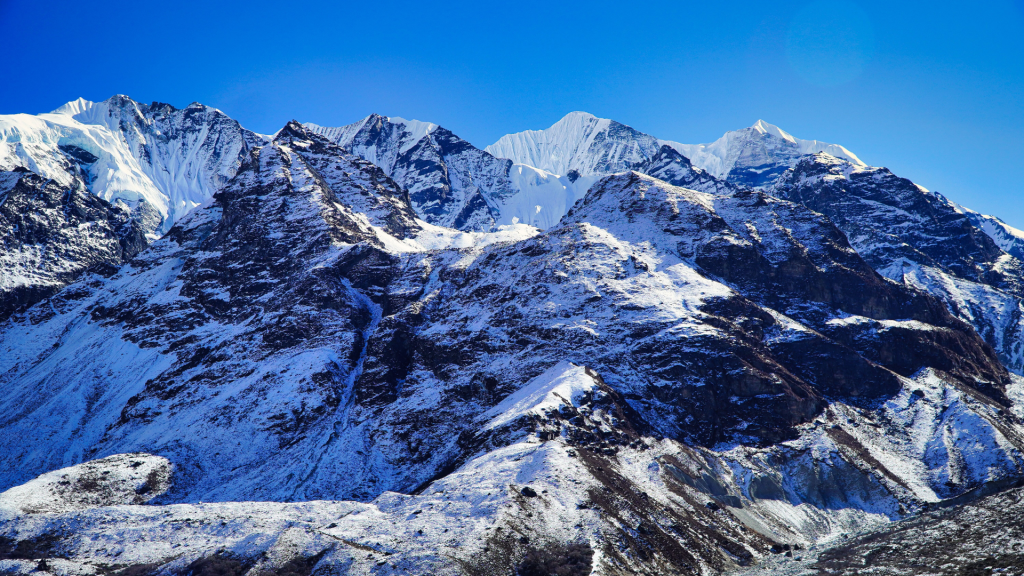
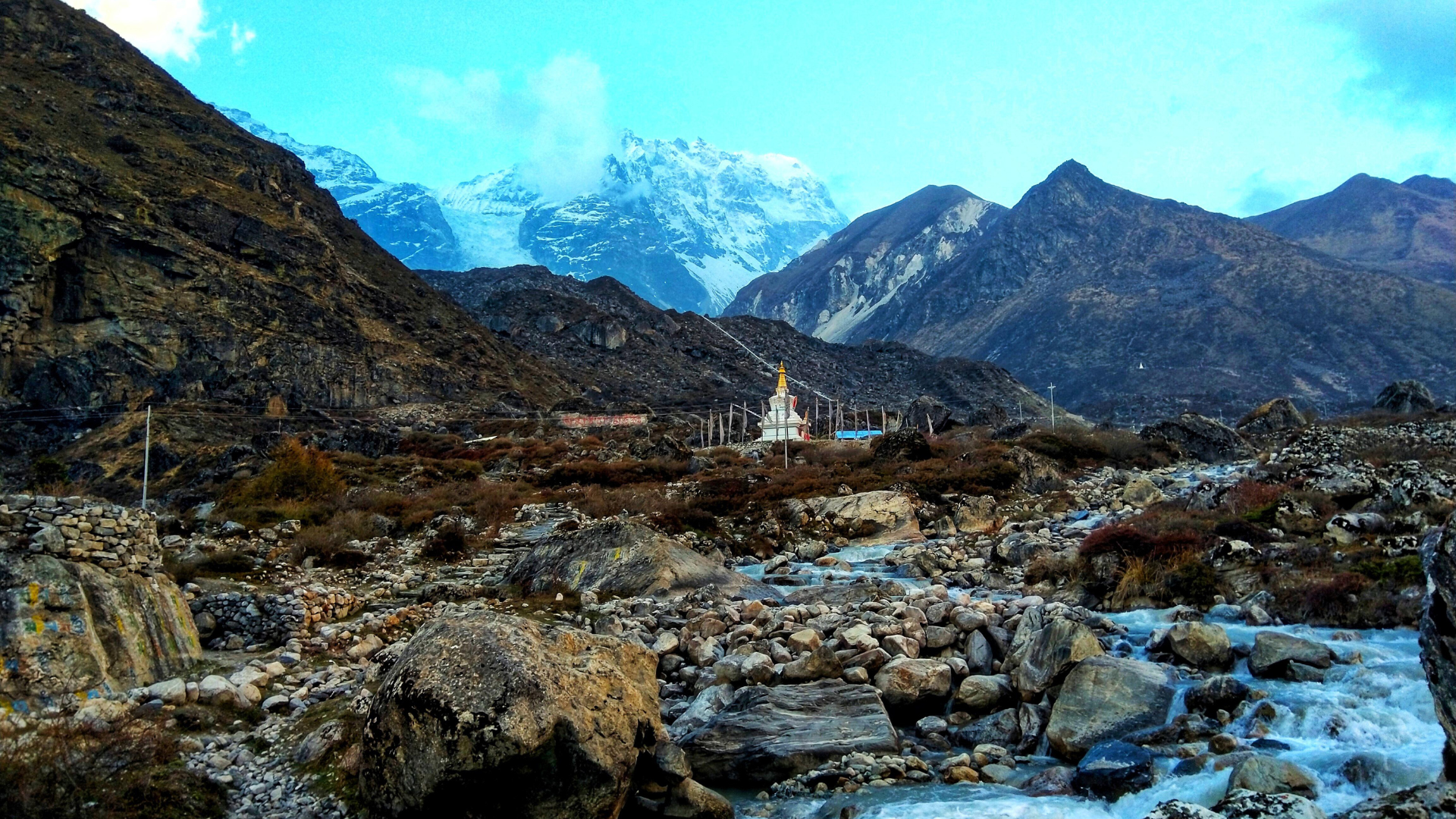
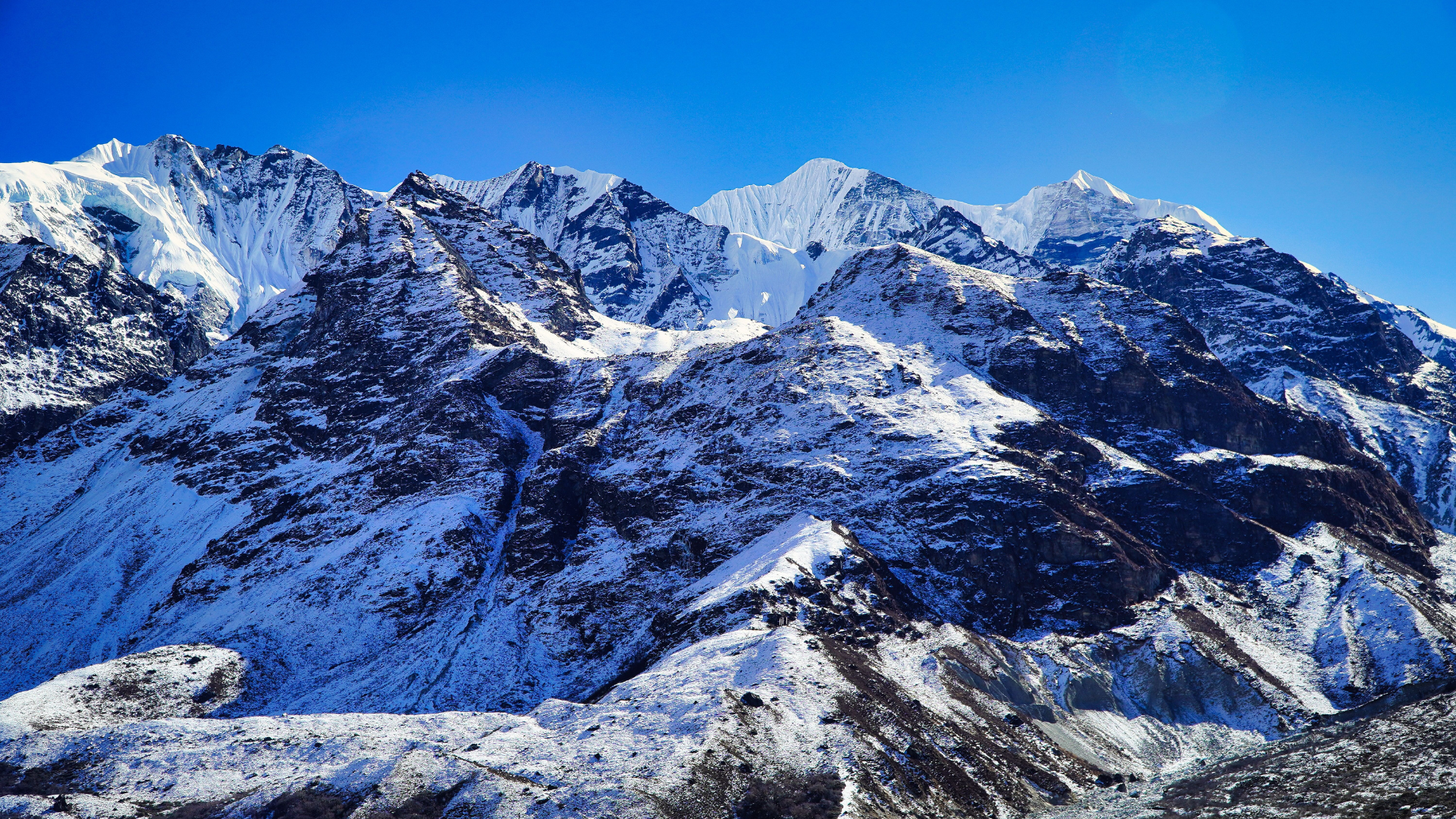
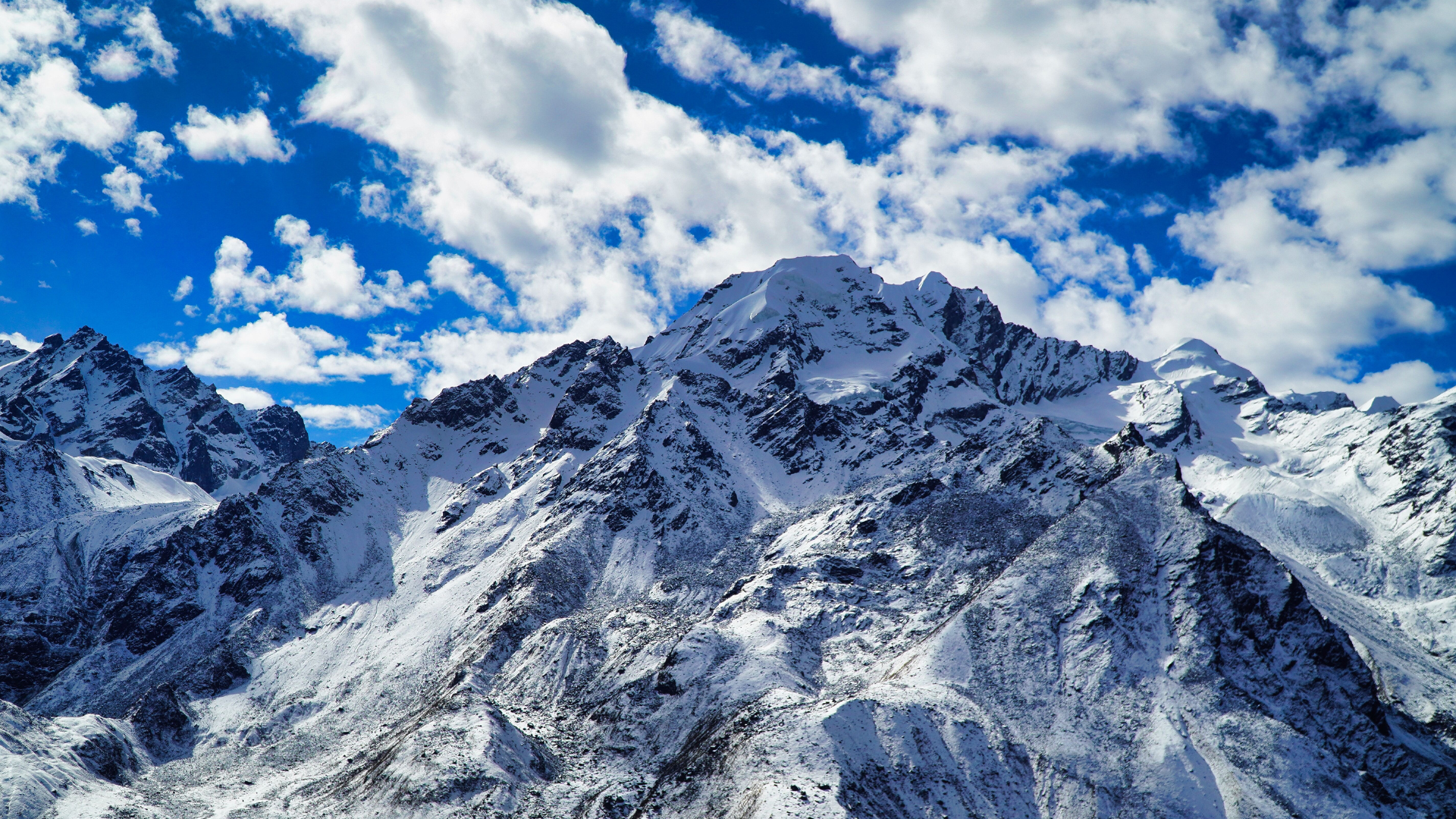
Often overshadowed by the Everest and Annapurna regions, the Langtang region offers a pristine, less crowded alternative that is just as spectacular. This 12-day journey takes you through the “Valley of Glaciers” to the holy frozen lakes of Gosaikunda, offering panoramic views of Langtang Lirung, Ganesh Himal, and even the Manaslu range.
Whether you are a seasoned hiker or a determined beginner, this guide covers everything you need to know about the Langtang Gosaikunda Trek 12 Days itinerary.
Trek Overview
- Region: Langtang Region (North of Kathmandu)
- Duration: 12 Days
- Max Altitude: 4,984m (Tserko Ri) / 4,380m (Gosaikunda Lake)
- Start/End Point: Syabrubesi / Dhunche
- Difficulty: Moderate
- Accommodation: Tea Houses
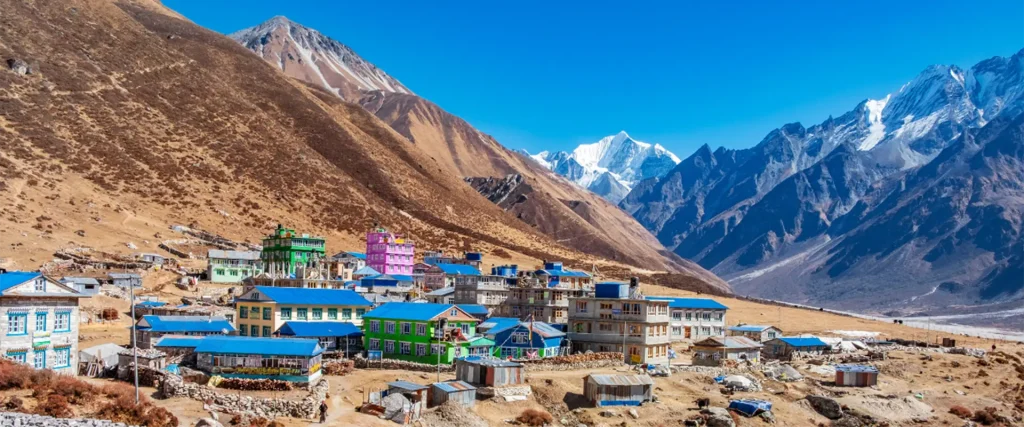
The trek combines two distinct trails: the Langtang Valley, famous for its Tamang culture and Yak cheese factories, and the Gosaikunda Lake trek, a sacred pilgrimage site for Hindus and Buddhists. The trail traverses the Langtang National Park, home to diverse flora like rhododendrons and fauna including the elusive Red Panda.
Trek Highlights
Tserko Ri (4,984m): The highest point of the trek offering 360-degree views of the Himalayas.
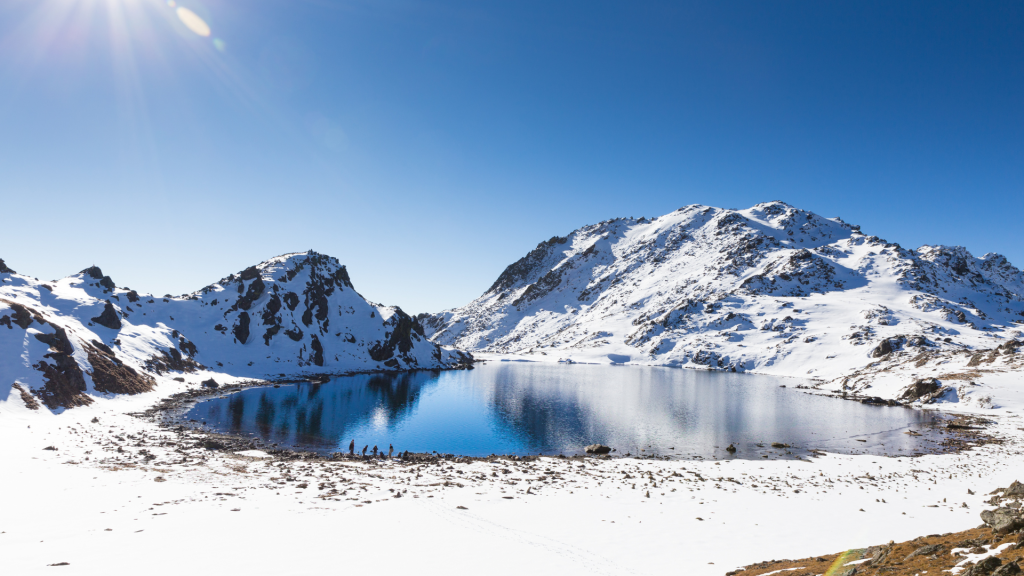
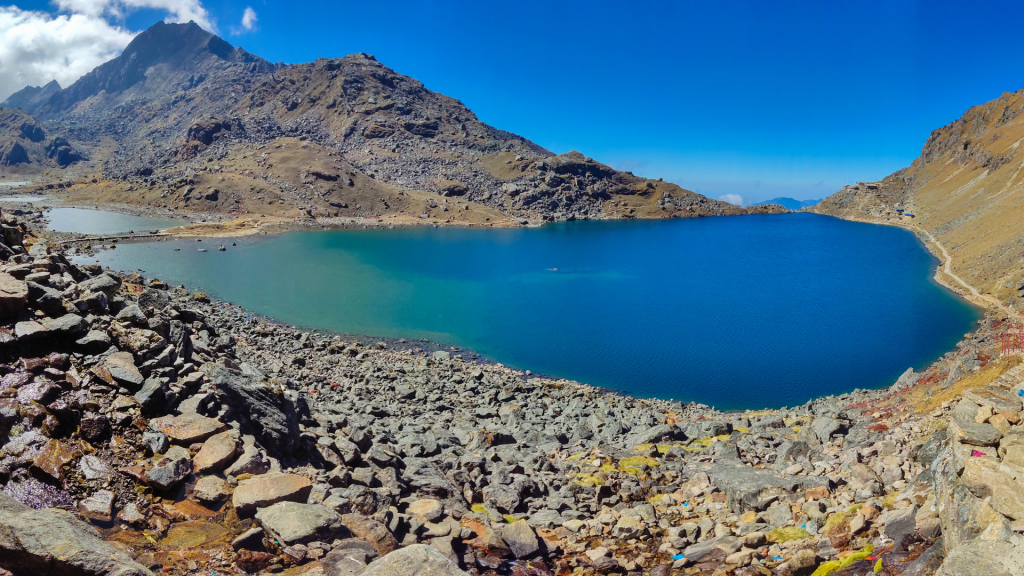
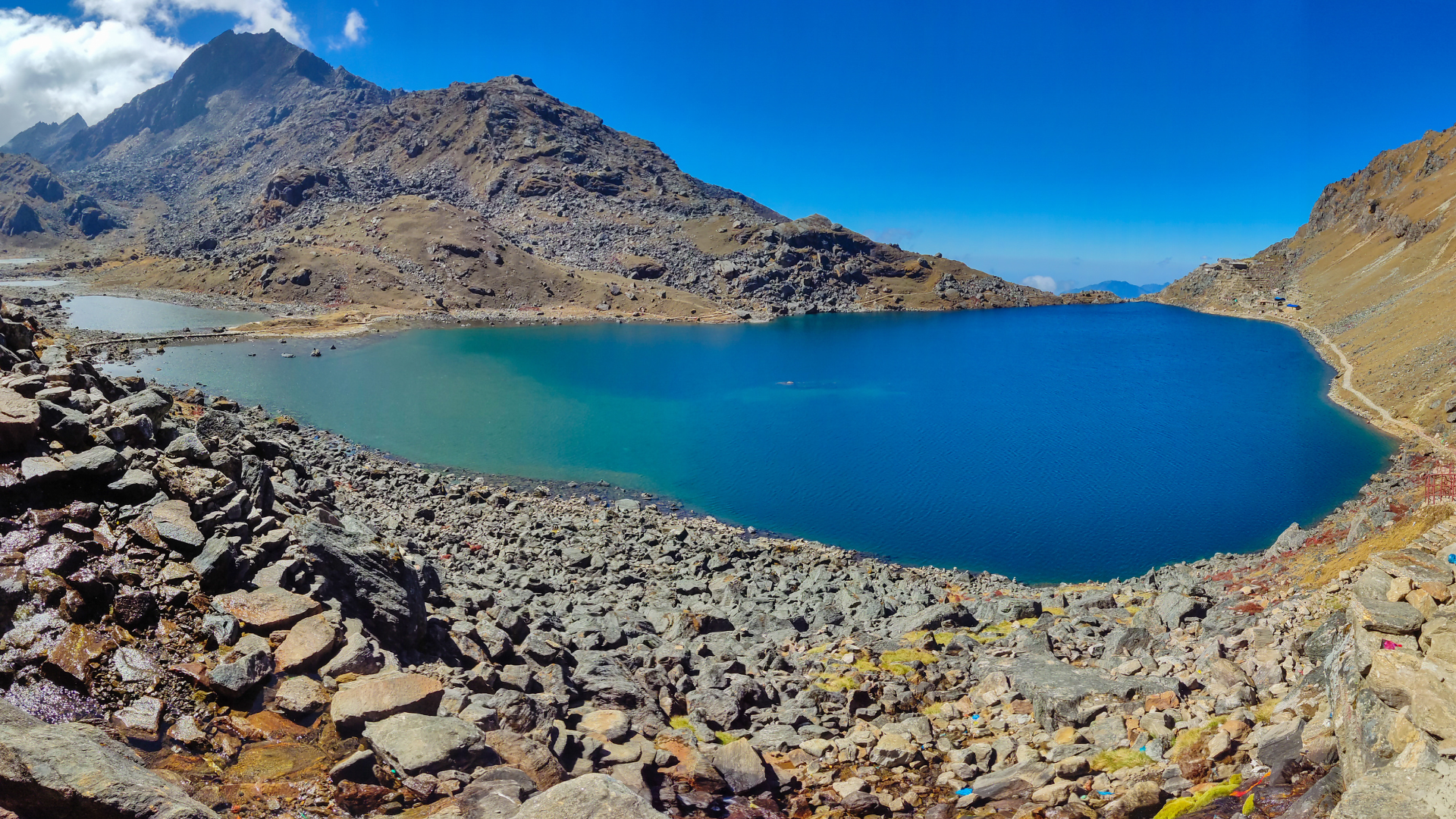
Gosaikunda Lake: A holy alpine freshwater oligotrophic lake system.
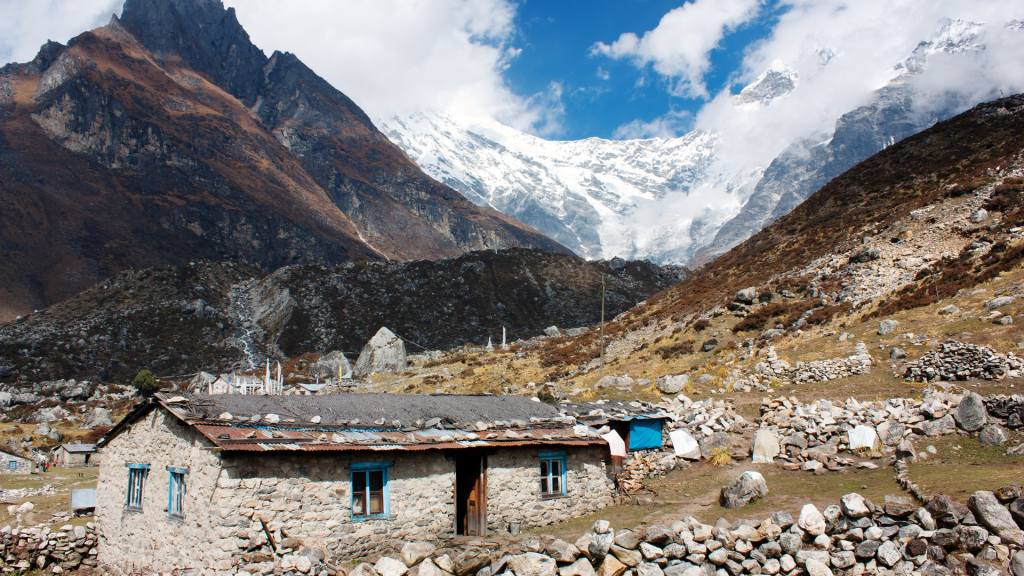
Tamang Heritage: Experience the unique culture, hospitality, and stone-built villages of the Tamang people.
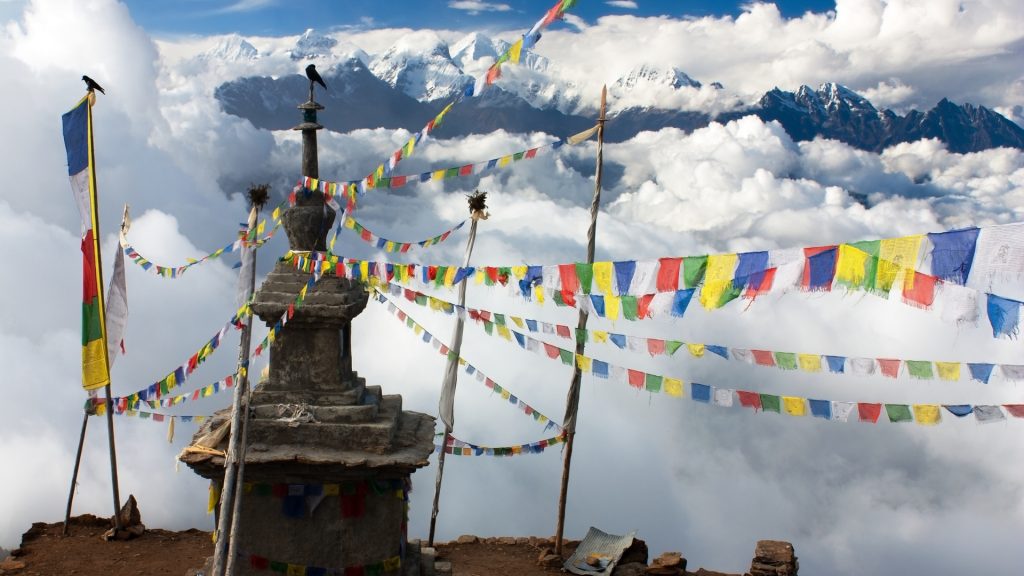
Kyanjin Gompa: An ancient monastery set against the backdrop of giant snowy peaks.
Wildlife: A chance to spot Himalayan Tahr, Musk Deer, and Red Pandas.
Yak Cheese: Visiting local government-operated cheese factories (Swiss technology).
Best Time and Season to Trek
To get the best views and safest trail conditions, timing is key.
1. Spring (March to May)
This is the season of colors. The hills are alive with blooming rhododendrons (Nepal’s national flower) and wildflowers. The weather is stable, and visibility is generally good.
2. Autumn (September to November)
Considered the best trekking season in Nepal. The monsoon dust washes away, leaving crystal clear skies and sharp mountain views. The major festivals of Dashain and Tihar also fall during this time, adding a cultural vibe.
Note: Winter (Dec-Feb) is possible but requires heavy gear due to snow. Monsoon (Jun-Aug) is generally avoided due to leeches and slippery trails.
Trek Difficulty: How Hard is it?
The Langtang Gosaikunda Trek is graded as Moderate.
Terrain: The trail involves steep ascents (especially climbing to Gosaikunda) and rocky descents.
Hours: You will walk an average of 5 to 7 hours daily.
Altitude: Altitude sickness is a risk as you cross 4,000m. However, the itinerary is designed with acclimatization in mind.
No technical climbing skills are required, but a good level of cardiovascular fitness is essential.
How to Train for the Trek
Start training 4–6 weeks before your departure:
Cardio: Running, swimming, or cycling 3-4 times a week to build stamina.
Leg Strength: Do squats, lunges, and calf raises.
Practice Hikes: Go for weekend hikes carrying a 5-8kg backpack to get used to the weight.
Stairs: Climb stairs instead of using the elevator; this mimics the steep steps found on the trail.
Things to Consider Before the Trek
Permits: You need the TIMS (Trekkers’ Information Management Systems) card and the Langtang National Park Entry Permit.
Cash is King: There are no ATMs after Syabrubesi or Dhunche. Carry enough Nepali Rupees for the entire duration.
Connectivity: Ncell and NTC reception is available in most places, but expect no signal in deep valley pockets. WiFi is available at tea houses for a small fee.
Water: Do not buy plastic bottles. Bring a reusable bottle and water purification tablets or a LifeStraw.
Detail Itinerary
Syabrubesi Altitude: 1,503m
Drive Duration: 7–8 hours (122 km)
Route: Kathmandu → Trishuli Bazar → Kalikasthan → Dhunche → Syabrubesi
The Journey:
- Depart Kathmandu early (around 7:00 AM). You will take a local bus or private jeep heading north along the Pasang Lhamu Highway.
- The road winds through the hills, offering views of the Ganesh Himal range and terraced farms.
- Lunch Stop: Usually at Trishuli Bazar or Ramche.
- After passing the district headquarters of Dhunche, the road descends steeply to Syabrubesi, a bustling town at the confluence of the Bhote Koshi and Langtang rivers.
- Overnight: Guest house in Syabrubesi.
Altitude: 2,450m
Walking Time: 6 hours
Distance: ~11 km
Difficulty: Moderate (Steep stairs towards the end)
The Trail:
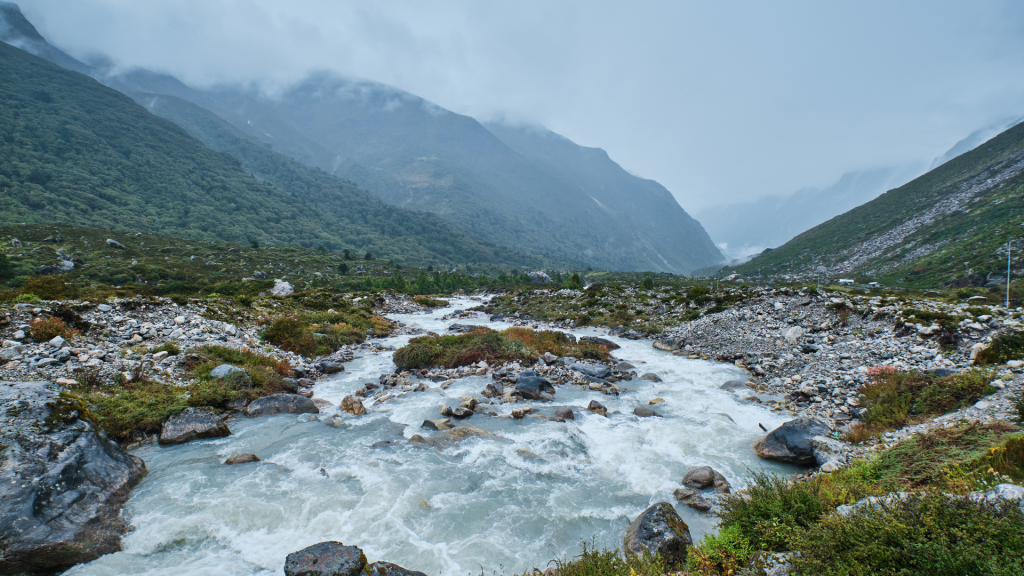
- Morning: Cross the suspension bridge over the Bhote Koshi River. The trail immediately enters the forest, following the Langtang Khola (river) upstream. You will spot Langur monkeys jumping between trees.
- Mid-Way: You will pass Bamboo (1,970m), a popular lunch spot with a few teahouses located right by the roaring river.
- Afternoon: After lunch, the trail gets steeper. You will climb through a subtropical forest of oak and maple.
- The Challenge: The final hour involves a steep ascent to Rimche (2,400m) before leveling out slightly to reach the cluster of lodges known as Lama Hotel.
- Overnight: Teahouse in Lama Hotel (located in a narrow river gorge, limited sunlight).
Altitude: 3,430m
Walking Time: 5–6 hours
Distance: ~14 km
Difficulty: Moderate
The Trail:
- Morning: The day starts with a climb through hemlock and maple forests. As you reach Ghodatabela (3,000m), the dense forest clears, and the valley opens up into a classic U-shaped glacial valley.
- Lunch Stop: Ghodatabela (Horse Stable). This is an army checkpoint where your permits will be checked.
- Afternoon: The trail becomes more gradual. You will walk past water-driven prayer wheels and yak pastures.
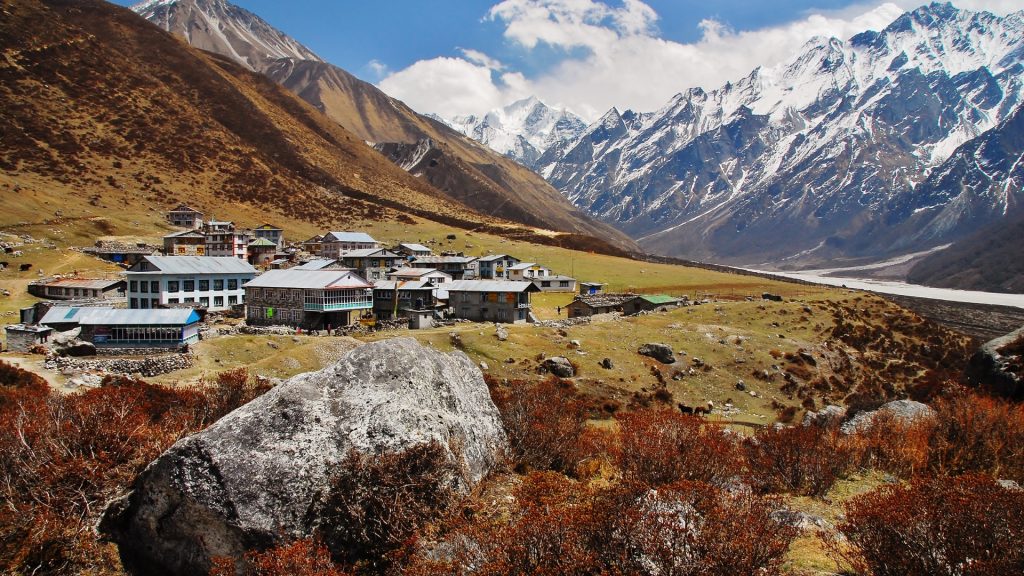
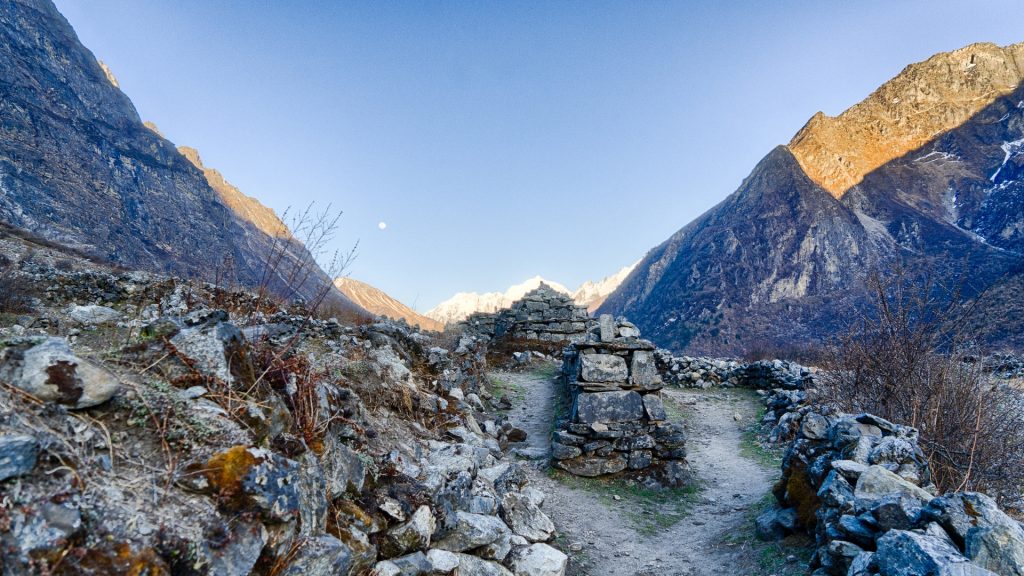
- Landmark: You will pass the large landslide area where the old Langtang village stood before the 2015 earthquake. A memorial mani wall honors the victims.
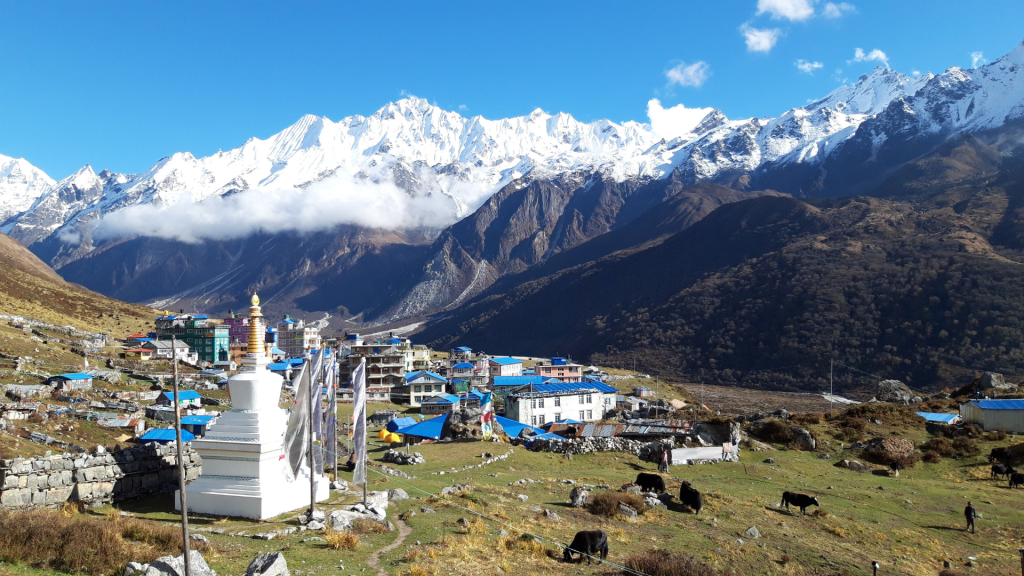
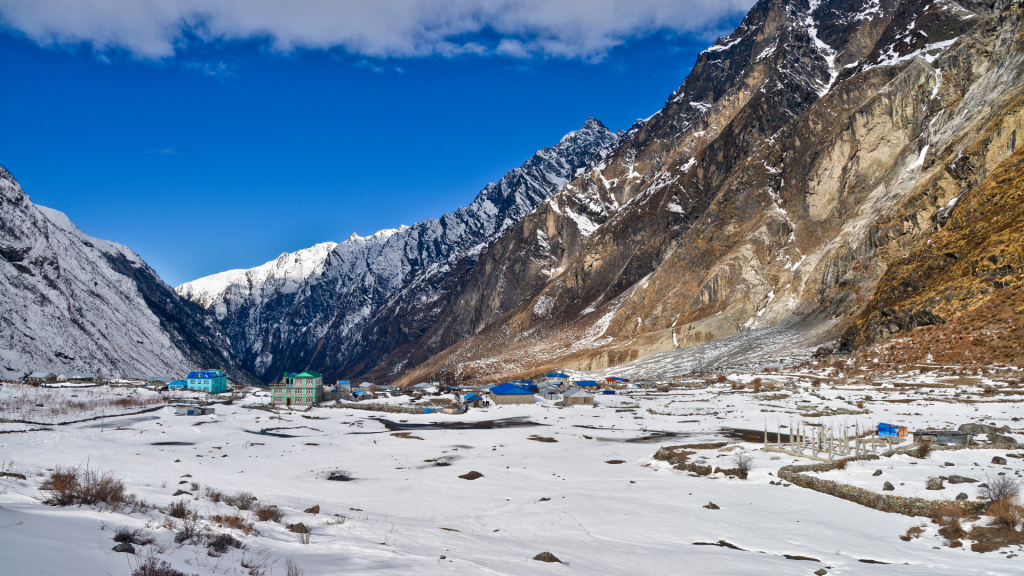
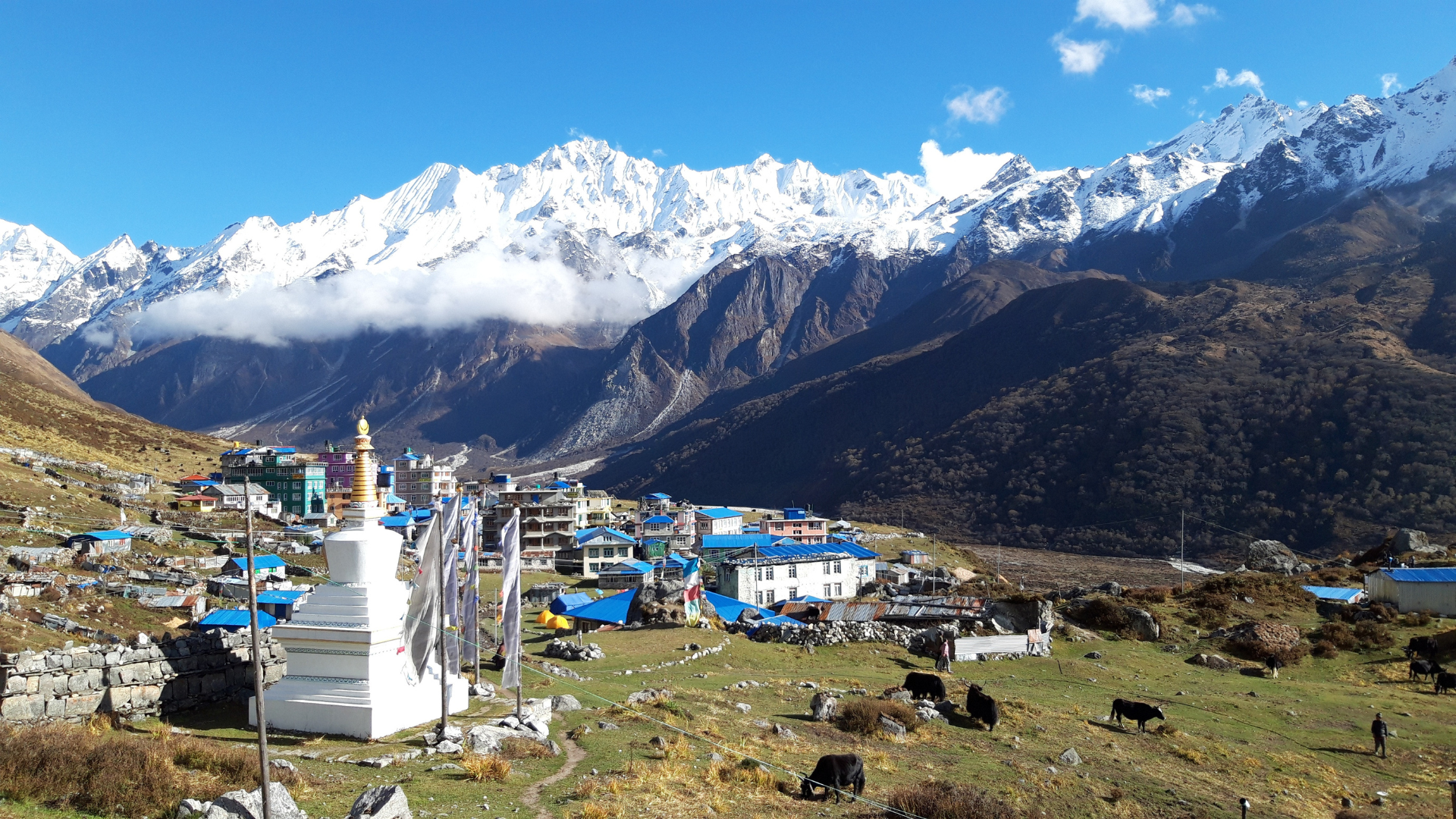
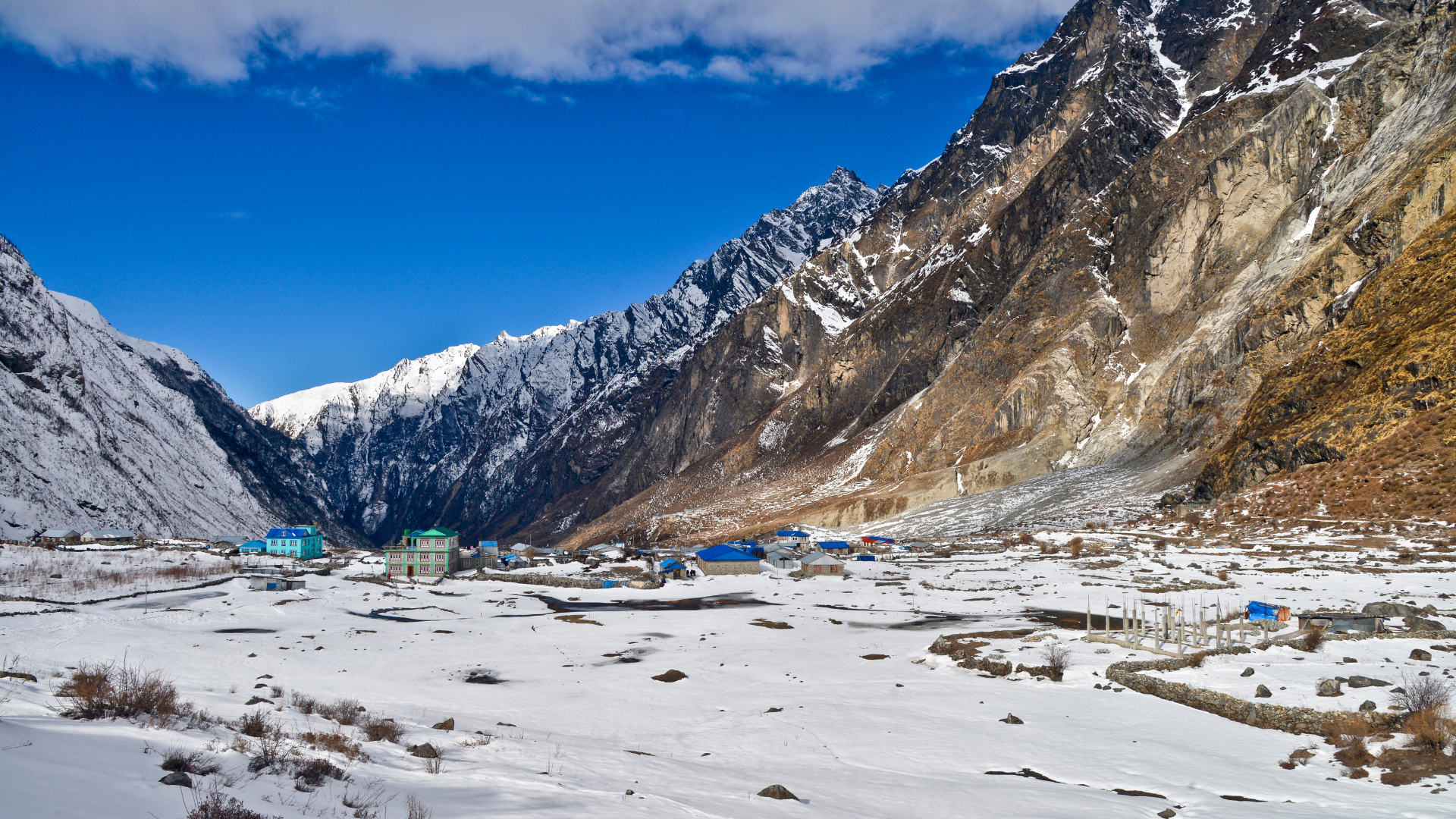
- Arrival: The new Langtang Village is built slightly above the old site, featuring colorful modern tea houses.
- Overnight: Teahouse in Langtang Village.
Altitude: 3,830m
Walking Time: 3–4 hours
Distance: ~6.5 km
Difficulty: Easy/Leisurely
The Trail:
- Morning: A short, scenic walk. The path winds through the tiny settlements of Mundu and Sindum.
- Highlights: You will see the largest Mani wall in Nepal, inscribed with "Om Mani Padme Hum." Huge yaks graze on the alpine meadows.
- Views: As you approach Kyanjin, the views of Langtang Lirung (7,227m), Ganchenpo, and Kibgyu Ri become dominating.
- Arrival: Arrive at Kyanjin Gompa by lunchtime.
- Afternoon Activity: Visit the Yak Cheese Factory (try the fresh curd) and the ancient Kyanjin Monastery. If energetic, hike a little way up the glacial moraine to see the Langtang Lirung glacier.
- Overnight: Teahouse in Kyanjin Gompa.
Max Altitude: 4,984m (Tserko Ri Summit)
Walking Time: 7–9 hours (Round trip)
Difficulty: Strenuous
The Hike:
- Early Start: Wake up at 4:30 AM or 5:00 AM. Pack a packed lunch and plenty of water.
- The Ascent: The trail is steep and rocky. You will ascend over 1,000 meters. The air is thin, so slow, steady pacing is crucial.
- The Summit: At the top of Tserko Ri, you are rewarded with a 360-degree panorama of over 20 Himalayan peaks, including Shishapangma (8,027m) in Tibet.
- Alternative: If Tserko Ri feels too tough, you can hike Kyanjin Ri (4,773m) instead, which takes only 3–4 hours and offers equally stunning views.
- Descent: Carefully hike back down to Kyanjin Gompa for a well-deserved dinner.
- Overnight: Same teahouse in Kyanjin Gompa.
Altitude: 2,450m
Walking Time: 6–7 hours
Distance: ~20 km
Difficulty: Moderate (Long descent)
The Trail:
- You will retrace your steps back down the valley. Since it is mostly downhill, you will cover a lot of distance.
- Pass through Langtang Village and Ghodatabela.
- Lunch Stop: Ghodatabela or Thangshyap.
- Continue descending into the tree line until you reach Lama Hotel. The air will feel much richer in oxygen here!
- Overnight: Teahouse in Lama Hotel.
Altitude: 2,210m
Walking Time: 5–6 hours
Difficulty: Moderate (Steep uphill in afternoon)
The Trail:
- Morning: Descend from Lama Hotel back towards Bamboo.
- The Junction: Before reaching Syabrubesi, at a place called Pairo (Landslide), you will take a branching trail that leads uphill.
- The Climb: Cross a suspension bridge and begin a steep ascent towards Thulo Syabru.
- Arrival: Thulo Syabru is a beautiful Tamang/Sherpa village perched on a ridge. It offers electricity, better WiFi, and great views of Ganesh Himal.
- Overnight: Teahouse in Thulo Syabru.
Altitude: 3,330m
Walking Time: 4–5 hours
Difficulty: Moderate (Consistent uphill)
The Trail:
- Morning: The trail climbs steeply through the village and into dense forests of oak, fir, and rhododendron.
- Mid-Way: You will reach Foprang Danda (3,200m), a fantastic viewpoint for the Langtang range and Ganesh Himal.
- Arrival: The trail flattens out slightly as you enter Shin Gompa (Chandanbari).
- Highlights: Visit the cheese factory here (one of the oldest in Nepal) and the Phulung Monastery. The area smells of fresh pine and cheese.
- Overnight: Teahouse in Shin Gompa.
Altitude: 4,380m
Walking Time: 5–6 hours
Difficulty: Strenuous (Altitude gain)
The Trail:
- Morning: A steady climb through the forest takes you to the treeline at Cholangpati (3,580m).
- Views: From here, you get panoramic views of Langtang Lirung, Manaslu, and the Annapurnas in the west.
- Laurebina: Continue climbing to Laurebina Yak (3,910m). This is often the lunch spot. The vegetation turns into alpine scrub and bare rock.
- The Final Push: A narrow cliff trail (safe, but exposed) leads you to the first lake, Saraswati Kunda, then Bhairav Kunda, and finally the main holy lake, Gosaikunda.
- Overnight: Teahouse on the shores of Gosaikunda Lake. (It will be very cold here!).
Altitude: 3,330m
Walking Time: 5–6 hours
Difficulty: Moderate (Descent)
The Morning:
- Wake up early to see the sunrise turn the frozen lake into gold.
- Walk around the lake shore. According to legend, the god Shiva created this lake by thrusting his trident (Trishul) into the mountain to extract water to cool his stinging throat after swallowing poison.
The Descent:
- After breakfast/early lunch, retrace your steps back down past Laurebina and Cholangpati.
- The descent is easier on the heart but watch your knees on the rocky steps.
- Overnight: Teahouse in Chandanbari (Shin Gompa).
Altitude: 1,960m
Walking Time: 4–5 hours
Difficulty: Easy
The Trail:
- A long, pleasant descent through pine, redwood, and rhododendron forests.
- You will pass the small settlement of Dimsa and Deurali.
- The trail eventually meets the road and leads into Dhunche, the administrative headquarters of the Rasuwa district.
- Evening: Celebrate your last night with your guide and porters. This is the customary time to give them their tips.
- Overnight: Hotel/Lodge in Dhunche.
Drive Duration: 6–7 hours
The Journey:
- Board a bus or jeep from Dhunche. The drive is smoother than the way up as you are descending from the hills.
- Arrive in Kathmandu in the afternoon.
- Transfer: To your hotel.
- End of Trip.
Necessary Equipment & Gear for Langtang Gosaikunda Trek
Packing light but right is the golden rule.
- Head: Sun hat, wool cap, sunglasses (UV protection).
- Upper Body: Thermal base layers, fleece jacket, waterproof/windproof shell, Down jacket (essential for evenings).
- Lower Body: Trekking trousers (convertible are great), thermal bottoms.
- Feet: Broken-in hiking boots (waterproof), camp shoes/sandals, merino wool socks.
- Gear: Sleeping bag (rated -10°C), trekking poles (saves your knees), headlamp, 40-50L backpack.
- First Aid: Diamox (for altitude), blister plasters, painkillers, personal meds.
Includes/Excludes
Cost Includes
- Airport Pick-up and Drop-off
- Kathmandu to Syabrubesi & Dhunche to Kathmandu transport
- Langtang National Park Permit & TIMS Card
- Licensed English-speaking Trekking Guide & Porters
- Accommodation in Tea Houses during the trek
- 3 Meals a day (Breakfast, Lunch, Dinner) on trek
- First Aid Kit & Oximeter
Cost Excludes
- International Airfare & Visa Fees
- Travel Insurance (Must cover helicopter rescue)
- Personal trekking equipment
- Lunch and Dinner in Kathmandu
- Tips for guide and porters
- Extra drinks (Alcohol, soft drinks, boiled water)
- Hot showers & WiFi charging fees at tea houses